
Breast milk hues and variations
More Shades Than You’d Ever Imagine — Each With Its Own Story
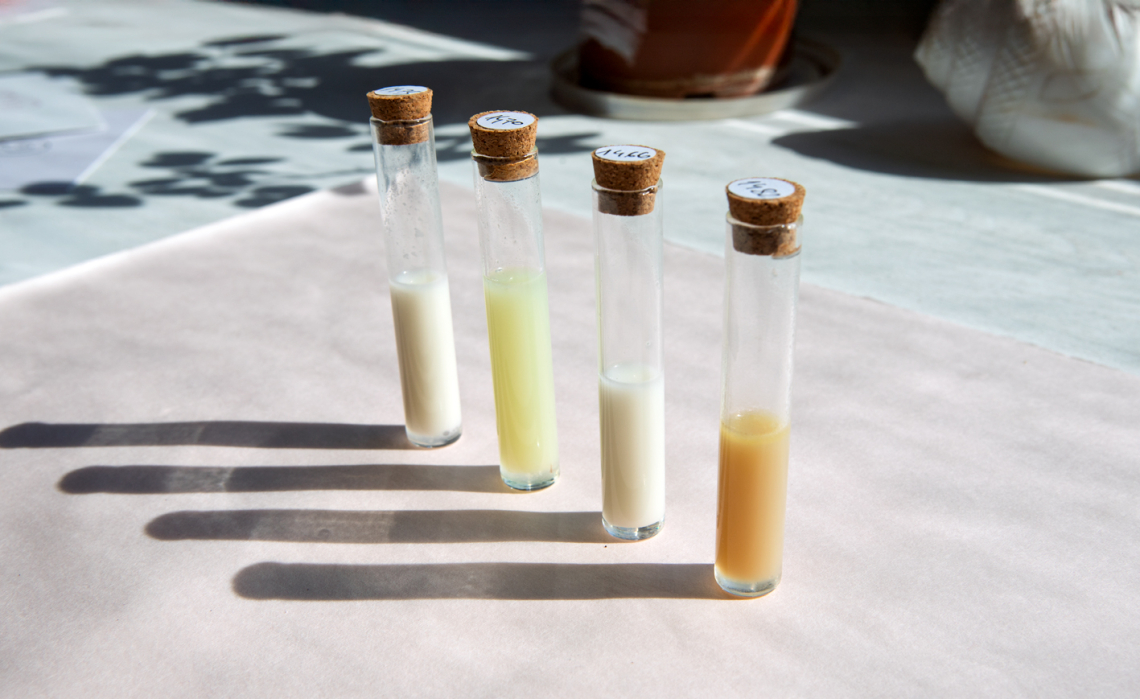
When mothers send their milk to my studio, I’m always amazed by its colors.
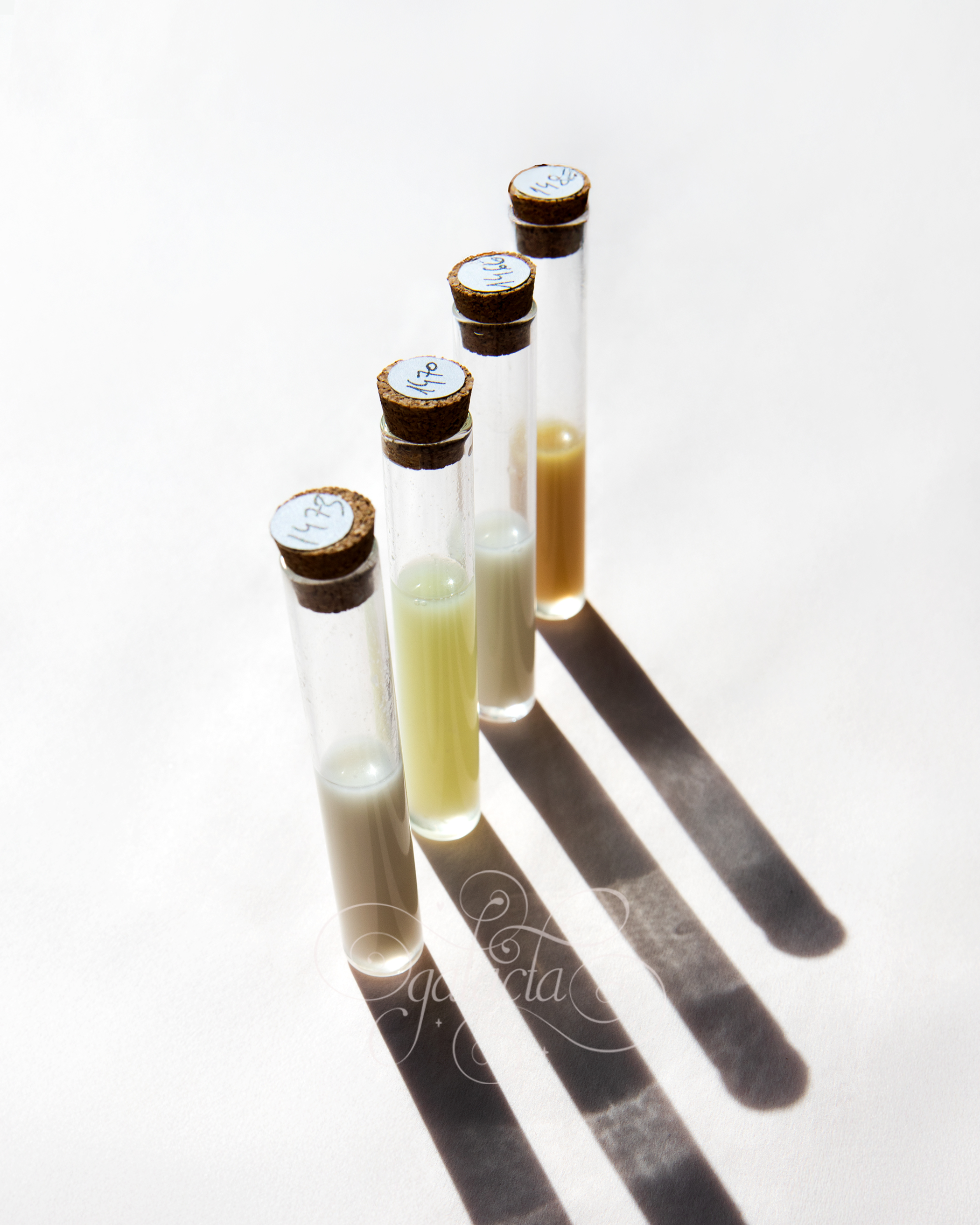
Some are almost pearly white, others warm as honey, and some reveal subtle tones of vanilla, caramel, or even a bluish shimmer.
Each shade has its reason, just like each mom has her own motherhood story.
This natural diversity fascinates many mothers. In this post, I’ll share why breastmilk varies so much and what these beautiful hues really mean.
Once it arrives, it’s carefully labeled, sealed in a sterile vial, and stored in our archive for at least two years — in case the jewelry ever needs to be remade.
The Color of Milk Reflects Its Composition
Breastmilk isn’t static. Its composition changes day by day, feed by feed, even within a single nursing session.
Color and texture depend on the balance of fats, proteins, vitamins, and the mother’s diet.
That’s why two bottles from the same mother can look completely different — and both be perfectly healthy.
Foremilk and Hindmilk — Morning Light and Golden Sunset
At the beginning of a feeding, a mother produces foremilk — lighter, bluish milk rich in lactose.
It quenches thirst and contains less fat but more protein.
As the feeding continues, hindmilk appears — thicker, creamier, and more golden, full of fats and energy.
Together, they create a beautiful palette that ranges from almost transparent to deep amber.
Vitamins and Carotenoids Bring Warmth
Pigments such as beta-carotene, lutein, and vitamin A give milk its warm beige or golden tone.
Mothers who eat plenty of orange or green vegetables (like carrots, sweet potatoes, or spinach) often notice a soft amber hue in their milk.
Sometimes, a faint greenish tint appears due to vitamin B2 (riboflavin), which is completely natural and nothing to worry about.
When the Color Surprises You — Pink, Bluish, or Grayish Milk
Occasionally, milk may take on unusual shades:
-
Pink — after eating beets or berries
-
Bluish — lower fat content, often seen in morning milk
-
Grayish or pale white — thinner milk after frequent nursing or higher hydration
Consistency — a Mirror of the Day
Milk density depends on the water-to-fat ratio.
Hydration, nutrition, and feeding rhythm determine whether the milk is light like coffee creamer or rich and velvety.
When cooled, a natural fat layer may form on top — a sign of richness, not spoilage.
✨ Milk as a Trace of a Moment
Every drop of breastmilk contains over 2,000 known components — lipids, proteins, enzymes, hormones, immune cells, and trace elements.
But beyond the microscope, every mother knows it also carries something unseen: a memory of early days, warmth, touch, and connection.
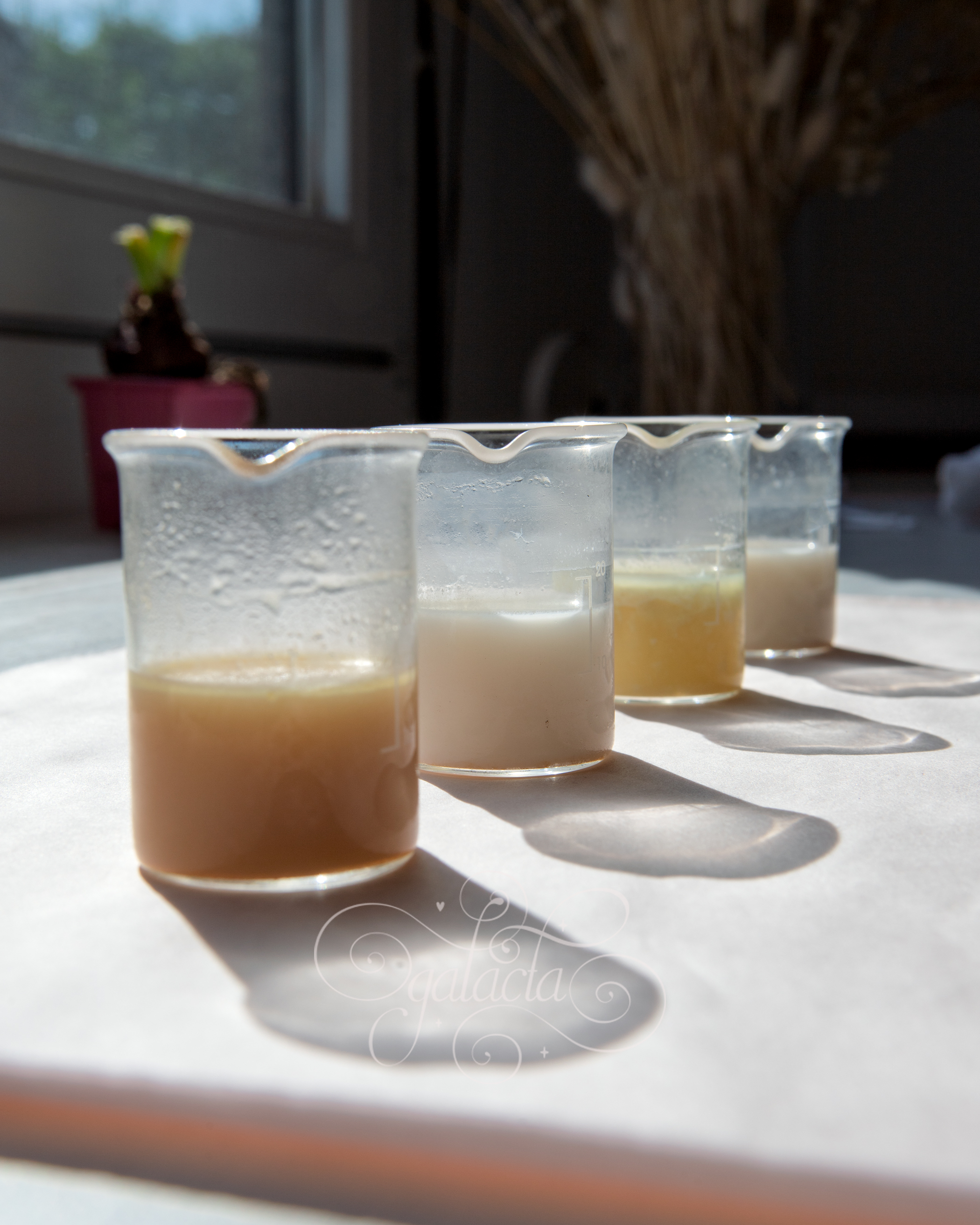
The photos show exactly that: diversity. Every mother has her story. Every milk sample has its shade.
In Conclusion
The many colors of breastmilk don’t reflect differences in quality — they reveal nature’s intelligence and individuality.
However, if you wish to keep your milk’s natural hue in your jewelry, simply mention it in the notes when placing your order.
Would you like to preserve the memory of your breastfeeding journey?
Explore Galacta’s breastmilk jewelry collection and create your personal symbol of connection.
Related Posts
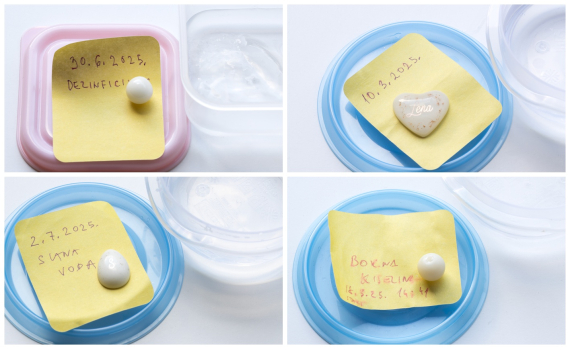
Breast milk stone durability tests: water, saltwater, disinfectant & boric acid
We tested breastmilk stones— samples were continuously immersed as follows: fresh water 6 mo, salt w..
Read more
Will My Breastmilk Jewelry Turn Yellow? – An Honest Look at Longevity and Market Differences
The market is full of options where it’s not always easy to tell which ones are trustworthy...
Read more
Is Galacta Jewelry Water-Resistant?
Galacta jewelry holds something irreplaceable: a drop of your milk, a lock of hair, maybe a cord stu..
Read more
Ageing of breastmilk jewelry
Breast milk jewelry is not just an accessory; it is an important keepsake that carries emotional val..
Read more


